
Walk Tioga County Former Owners Backward
A former-owner search begins with the latest confirmed grantee and treats each deed as one link in the chain. Record enough detail, every time, to prove the transfer covers the same land.
| Transfer date | Grantor to grantee | Deed type | Reference |
|---|---|---|---|
| Newest recording | Prior owner to current grantee | As indexed | Instrument or book/page |
| Earlier acquisition | Earlier grantor to that prior owner | As indexed | Instrument or book/page |
| Pre-index bridge | Name found in older index | Verify in deed book | Book/page and legal description |
The Online Tioga Deed Cutoff Is August 24, 1970
Deeds trace back through eSearch to August 24, 1970. Mortgages reach only to March 12, 1970. Many other categories start in September 2003. Tioga County was organized in 1791, so plenty of deed history sits offline in physical books. Use the guest index to spot references, then pull images through an account or a Clerk request. For owners before the cutoff, ask about the grantor-grantee index and the deed-book procedure.
Keep Former Owners on the Same Parcel
Before assuming two records belong together, compare the legal description, municipality, acreage, lot and block, filed-map references, PIN, SBL, and the adjoining owners. Street names and numbers change over time. A parcel can also be split, merged, or carved from a parent tract. When a description shifts, sketch which present-day land came from each earlier deed. The GIS map works fine for orientation. For proof, lean on the recorded deed and its filed map.
Mortgages and Releases Date a Transfer Era
A purchase-money mortgage filed close to a deed can separate buyers. It helps distinguish buyers who happen to share a name. Assignments and discharges stretch the timeline further. They cannot stand in for a missing deed. Even so, their references often point back to an earlier book and page. That citation sits in the deed records. Where a court event may have forced a transfer, search judgments and liens. Also search lis pendens in the Tioga County records. Confirm any result against the actual file. An index label is not the final outcome.
Use Tioga Historical Society Name Bridges
The Tioga Historical Society holds more than 300,000 surname cards. They are drawn from census returns, newspapers, family Bibles, family files, and local history. That is a deep bench. Its Research Center adds microfilm, diaries, memoirs, and published material to the mix. These sources can supply spellings and date ranges. They reach past the online cutoff for Tioga County deed records. Treat a family file as a lead, never as title evidence. The lead only counts once you convert it. Tie it to a Clerk deed, probate file, tax roll, or parcel record tied to the legal description.
Directories and Newspapers Explain Address Changes
Old directories and newspapers can bridge an address gap. The New York State Library's directories, Tioga newspaper runs, the Coburn Free Library, and the County Historian can all connect an earlier occupant to a street. The Owego Gazette, published from 1814, and Owego Free Press material dating to 1828 may describe sales, estates, fires, business changes, or road alterations. Search by surname, street, and year, then return to the deed books. Remember that occupancy and ownership are not the same thing.
Probate Can Interrupt a Simple Chain
An owner can pass away without ever signing a conventional sale deed. That is why Surrogate's Court matters. Search there for letters naming an executor or administrator. Then compare whatever instrument was recorded afterward against the Tioga County chain of title. Marriage and death certificates follow their own eligibility rules and transfer no land at all.
New York limits genealogy copies in most cases. Births stay closed for 75 years. Deaths and marriages run 50 years after the person has died. A documented descendant waiver can open some of these records in Tioga County and beyond.
No Verified Tioga Deed-Book Disaster Was Found
Tioga County publishes no account of a courthouse fire, flood, or lost deed book. Resist borrowing a neighboring county's disasters. Ask the Clerk instead whether a puzzling gap reflects spelling, category, reindexing, or a volume that simply has not been digitized yet.
Chain limit. Former-owner research reconstructs recorded transfers. It is not a professional title opinion and should label every unresolved gap.
Build a Tioga House-History Evidence Matrix
Build your evidence one row at a time, with each row covering a period. Keep ownership apart from occupancy. Deeds and estate instruments belong in the ownership column. The tax roll and related tax records sit in an administrative column beside them. A directory, census entry, obituary, or newspaper item can place an occupant. It can also date an event. A plat, GIS map, or building permit may explain a physical change to the parcel.
The matrix makes gaps obvious fast. A family can live in a house for years before they ever buy it. An estate can interrupt an ordinary run of conveyances. Even a renamed road can make one property look like two. Through all of it, the legal description still anchors the chain. The recorded instruments remain the spine of the Tioga County chain too.
Follow Official Genealogy Eligibility Rules
New York sets clear waiting periods for genealogy copies. Births stay restricted for 75 years. Deaths and marriages open after 50 years once the people involved are deceased, though a documented direct-descendant waiver can help in some cases, and certified copies carry narrower eligibility rules. The same framework applies whether your search starts with a Tioga County parcel number or a family name. Review the official genealogy source before you request anything.
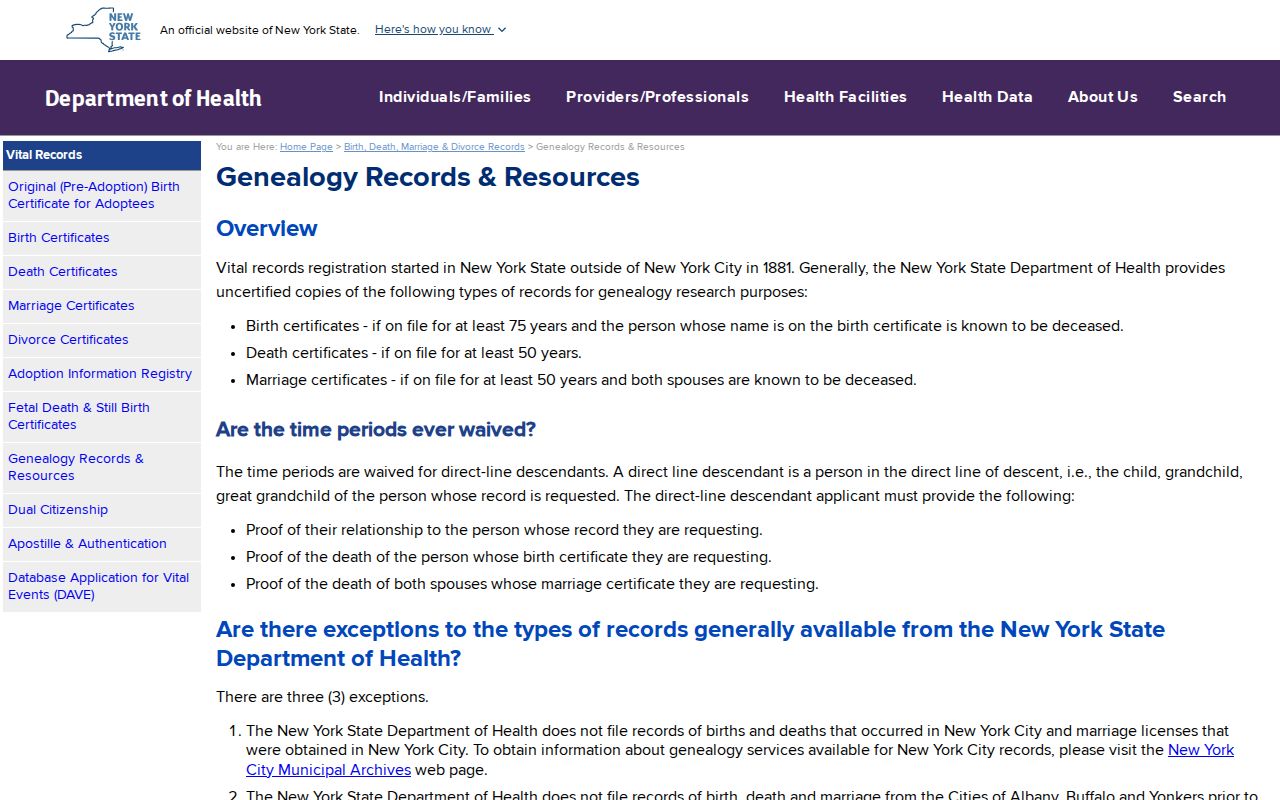
Officials follow eligibility rules that keep vital certificates from working as an open property index, so a lawful request must fit those limits.
Cross the 1970 Line without Guessing
Work the online chain back as far as the certified date allows. Contact the Clerk after that point. Your request should name the earliest owner you can document in full, exactly as indexed. Include the acquisition date, deed reference, municipality, and legal description. Ask for the older direct and reverse indexes covering that person and date range. Cite a specific deed book instead of requesting a broad, open-ended search.
Historical sources settle spelling and address problems. Tioga Historical Society requests reportedly run one to two weeks. Archived materials require advance notice. Its hours are Tuesday through Saturday, 10 to 4. The New York State Library does not staff individual remote genealogy searches. Plan an on-site visit or hire a local researcher. Those limits make a focused matrix of surnames, streets, and years worth the effort.
A newspaper story can explain why a gap exists. Consider a sheriff's sale, estate notice, fire, business transfer, or renamed road. Treat the article as a lead, not proof. Then find the court file, probate authority, tax proceeding, deed, or recorded map. That record turns the story into parcel evidence. When a link stays missing, label it rather than merging two similar names.
Keep alternate spellings in your notes, especially from handwritten or older indexes. But the chain itself should reproduce the recorded spelling. Search initials, surname variants, spouses, and trustees only far enough to reach the next instrument. Expand to fiduciary titles only when needed. That discipline keeps an exploratory property search separate from the evidence you actually report.